Findingyourvoice:howwebuildcorporatenarrativesforclients
OCTOBER 5, 2026 BY Tim Walsh
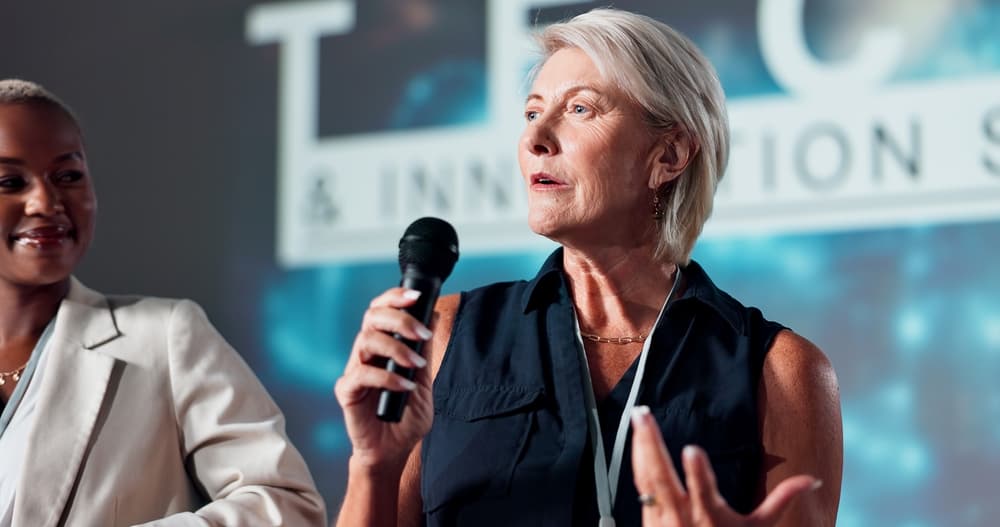
A corporate narrative helps you to speak with one voice and build trust
Every organisation has a story that’s worth telling. A corporate narrative gives your people the words and tone of voice to tell it consistently and persuasively.
In a noisy world in which your potential customers are being bombarded by messages from all angles every day, how does your organisation have a hope of cutting through? You have a great product and brilliant people making it happen, but you’re in a crowded marketplace. Others are selling what you’re selling – if not quite as well.
An important part of the answer is how your organisation talks about what it does, and why it exists. The problems it helps to solve, and how it solves them. In short, this is about telling your story. And in public relations, we call this your corporative narrative.
In simple terms, a corporate narrative is the story of why an organisation does what it does. It solves a problem or fulfils a need. It helps people address an issue, or issues. If it didn’t, it wouldn’t have a purpose and would be redundant. A corporative narrative explains the issues your organisation helps to address, and why it is the one to help people address them.
Why a corporate narrative matters
I believe a corporate narrative is one of the fundamental building blocks of how an organisation does public relations. That is, how it builds relationships at scale with the groups of people who matter to it. And this is why it matters:
- Consistency builds trust. Audiences believe organisations that are clear and consistent when explaining what they do. There is no confusion, only a steady, unwavering confidence. Familiarity breeds comfort.
- It equips everyone to speak. Leaders, staff and spokespeople draw on one shared story. A corporative narrative provides a solid platform on which an organisation can begin to raise its profile and engage more with the people who matter to it. You could say that it unlocks your potential.
- You have a distinct tone of voice. In a world being shaped increasingly by artificial intelligence, a narrative inspired by an organisation’s back story and the people behind it, will give you authenticity. An algorithm cannot recreate the blood, sweat and tears that went into making a success of your business.
- It persuades target audiences. The messages are written for what each audience cares about. A good corporate narrative will help you tailor the message to the specific group you want to influence, without losing that consistency.
- It makes every brief faster. Agencies, designers and AI tools work from one agreed source, giving you a strong tone of voice. Don’t underestimate the time saved and efficiencies gained by having a solid base for your communications.
In practical terms, it means that when you communicate as an organisation, through various channels, you have a clear, distinct and compelling message and tone of voice. What you say and the language you use does not vary depending on who is talking. You speak as one.
So, whether you’re giving a keynote on stage at a conference, sending out a press release, or posting something on LinkedIn, you communicate consistently. The different personalities in your organisation can shine through, but your people are on the same page. It is a team moving together, confidently in the same direction.
How we create a corporative narrative
When Branagh PR works with an organisation on a corporate narrative, we use a step-by-step process developed over many years:
- Discovery: listening inside your organisation. One-to-one conversations with leaders and key people across functions. We cover what you think makes your organisation distinctive, the language you use naturally, and where you feel the current messaging falls short.
- Discovery: listening outside. We talk to your customers, members or stakeholders where possible. This can show the gap between how your organisation sees itself and how others see it, and it gives you the authentic language your audiences use.
- Audit of existing communications. We review your website, literature, social channels and speeches to see what's working and where the voice drifts.
- Drawing out the themes. We synthesise what we hear. This is bringing together the good conversations with you, your team and your stakeholders, which collectively provide the inspiration for your new narrative.
- Drafting the narrative and tone of voice. We create the core story, tone of voice principles with "sounds like this" examples, and key messages tailored to each audience.
- Testing and refining with the client. Workshops or review rounds so the key members of your team feel like they own the result.
- Embedding it. A practical guide, a briefing session for staff and spokespeople, and templates for everyday use. Consider this your organisation’s verbal identity alongside its visual identity (logo, colourways etc). You design new marketing materials without your brand guidelines.
Signs you might need a corporate narrative
Organisations can reach a point where the way they describe themselves has fallen behind who they have become. It can happen gradually, and the first clue is often that your communications feel more awkward. The words don’t reflect where you are as a business. These are some of the signs or situations where that might happen:
- Your strategy has moved on. A new direction or a move into new markets needs a fresh story or even just a new chapter added.
- You are growing or merging. New teams bring their own habits, and a shared narrative helps everyone speak as one organisation. Mergers and acquisitions are often a great time for a refresh.
- There is a new leadership team. New leaders often want to set out their vision, and a corporate narrative gives them the language to do it.
- Your messaging varies from one team to the next. When the website and the sales pitch tell slightly different stories, audiences notice and trust begins to slip. Are you potentially customers or existing stakeholders getting a different story depending on who they speak to?
- Briefing others takes too long. If every new agency or freelancer needs a long explanation of who you are, a clear narrative and tone of voice guide will save time on every project.
- You find it hard to say what makes you different from the rest. If your people struggle to sum up why customers should choose you, a new corporate narrative can give them the clear and consistent message.
Do any of these situations sound familiar?
Branagh PR has helped numerous organisations find their voice and articulate why they exist. You too have a brilliant and unique story to tell, so let’s tell it!
Give us a call or email us today for an initial conversation.