



Casestudy:Writingnewsletterswiththereaderinmind
OCTOBER 16, 2026 BY Sydney Ball
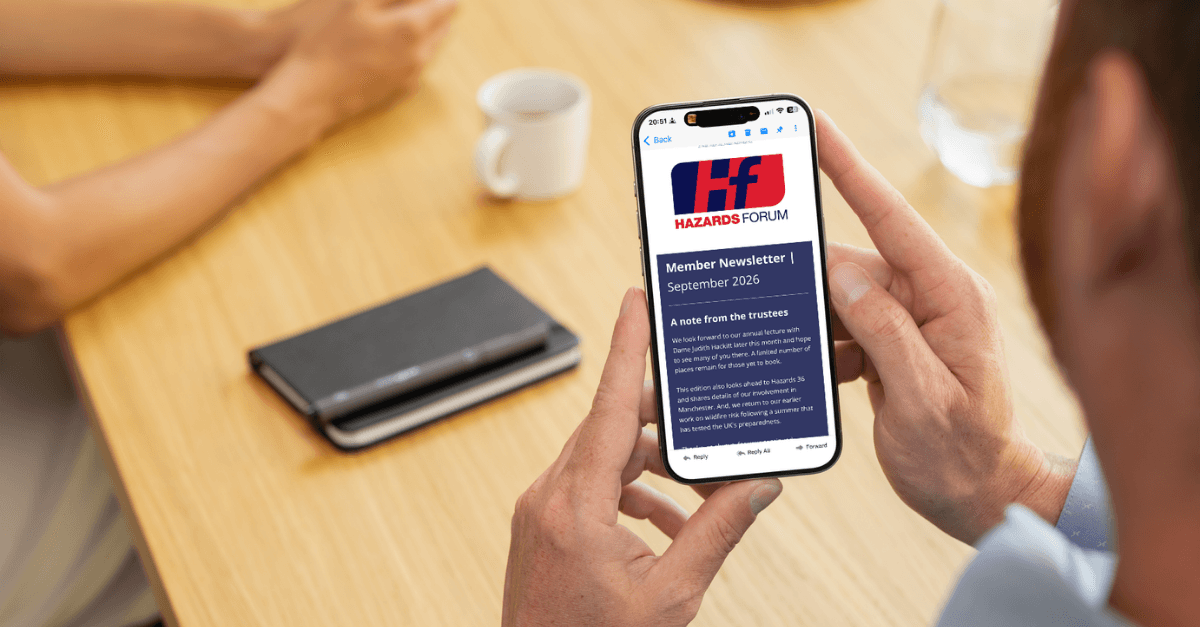
Newsletter on phone
You can be interested in an organisation’s work without checking its website every week. A big perk with newsletters is that they bring the news to you, whether it’s an event you’d like to attend or a report relevant to a question you’ve been thinking about.
For the organisation, it’s a way to keep a relationship going between the occasions when people actively get in touch. Readers can follow what’s happening and find opportunities to get involved, even if they’ve been out of the loop for a while. The real challenge for us in PR is deciding what will be of importance to them, especially when there’s plenty the organisation wants to say.
Deciding what needs a space
At Branagh PR, we write the member newsletter for Hazards Forum, a safety membership organisation. How much I explain in each item depends on what I’m asking the reader to do. An invitation to a workshop needs to help someone decide whether to attend, while an introduction to a report needs to make its relevance and benefit clear enough for them to want to read further. Both could concern safety leadership and interest the same Hazards Forum member, yet need uniwue approaches.
There’s also the question of why we’re including something now. An event with bookings about to close has an obvious reason to appear in the newsletter. With other updates, I consider what matters to Hazards Forum alongside the subjects members are likely to be following. Giving every item a similar amount of space might make putting the edition together easier, but in some cases notices only need a few lines. Leaving them short gives me more room elsewhere, particularly when a subject needs some background before the main point will make sense.
Reading the pieces together helps me decide where they will fit best in the running order. Related updates can sit alongside each other, although I’m conscious of how much reading two substantial stories in succession might involve. A shorter item between them can give the email a little breathing room.
Writing for people who know their subject
Hazards Forum members know a great deal about the subjects we cover, although they won’t all have followed the same discussions. When I’m introducing a report, I need to give someone enough background to understand why it might interest them, without going back over information they already know.
Technical language isn’t necessarily a problem. Sometimes a specialist term is the clearest way to explain something, provided the surrounding text makes sense to someone whose experience lies in a different area. I’m more concerned about whether shortening a piece has altered its meaning. If a finding only applies in certain circumstances, the qualification needs to stay, even when the sentence would read more neatly without it.
The contributions also need to sound comfortable together. A passage taken from a report will usually read differently from an event announcement, and shortening both won’t automatically bring their tones closer. For the Hazards Forum newsletter, I work on the introductions and phrasing so members can move between subjects without feeling as though they’ve started reading an entirely different publication.
Looking at the email as a reader
Once the copy is in the template, I can see how much space it actually takes up. A paragraph that looked quite modest in a document can seem much longer on a phone, especially when another substantial item follows it.
Even the wording of a link can prompt another look at an item. “Register for the workshop” is clearer than “Find out more” when the destination is a booking page. Before we use it, though, I need to be satisfied the copy has explained enough for someone to decide whether they want to attend. Otherwise, I’m asking them to make a decision before giving them the information.
Hazards Forum reviews the draft before we send it. After working through any amendments, I proofread the test email and follow its links through to their destinations. Seeing the finished edition in an inbox gives me a chance to read it in the same form members will receive, rather than as separate pieces I’ve been editing.
Learning from the response
After sending, I review which stories and links attracted attention and share the results with the client. It’s useful to see where people chose to click, although the figures need some thought before they can inform the next edition.
A workshop nearing its booking deadline might attract more clicks than a report aimed at a smaller group of specialists. I wouldn’t take this alone as a reason to give the report less space. Perhaps it appeared too far down the email, or my introduction didn’t explain its relevance clearly enough.
If you’d welcome some help with your organisation’s newsletter, we’d be happy to talk.
