Casestudy:Designingouttherisk:tellingthestoryofHoneywell’sself-testingdetectors
AUGUST 1, 2026 BY Tim Walsh
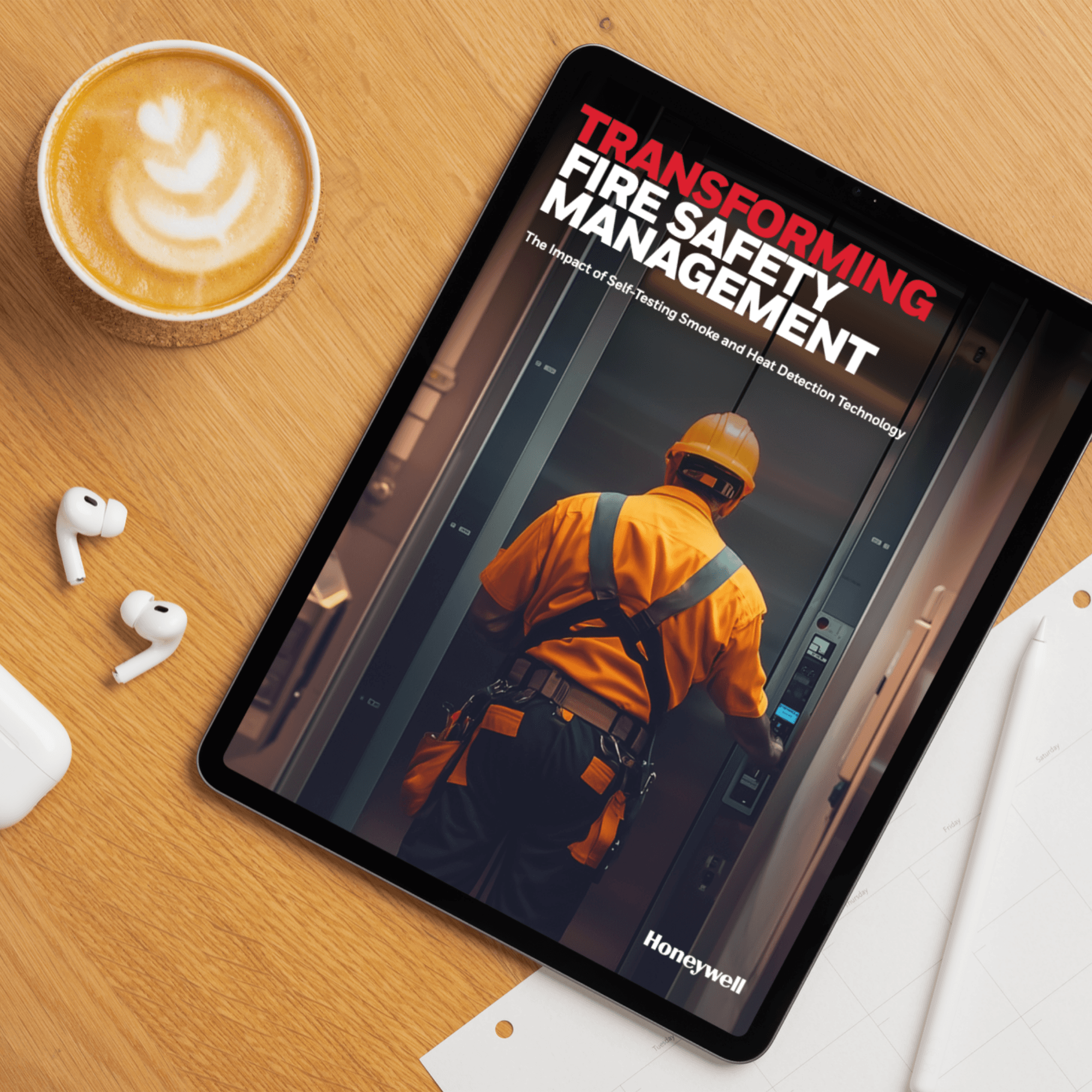
Honeywell guide on self-testing detectors
This is the story of how we worked with tech giant Honeywell to showcase their ground-breaking self-testing smoke and heat detectors.
The starting point
Safety and health practitioners talk about the hierarchy of controls. It is the framework that guides organisations towards the best possible measures for keeping their people safe, and at the top of it sits 'Elimination'. To the safety and health practitioner or the facilities manager, this is the control to aim for. Why do something that puts you at risk when there is another way?
Working at height remains the greatest workplace killer. Human error or a disregard for regulations can very often have fatal consequences. It is why the people who design workplaces and manage workplace safety try to eliminate work at height risks at the design phase.
Technology has been quietly chipping away at those risks for years. Robotics limit the need to work on the side of a tank or a ship hull. Drones carry out inspections and surveys without workers being physically present. Extendable tools are now common across industry.
Honeywell had done something similar for fire risk management. Its self-testing detectors allow safety and health practitioners and facilities managers to remove work at height from an important part of their fire safety regime, namely smoke detection, including in ceiling voids and other places that are dangerous and hard to reach.
The technology was genuinely new. The story behind it had not yet been told.
The brief
Honeywell approached us to create content that would support the promotion of its self-testing detectors across two markets. The company's Global Product Offering Leader wanted something with more weight than product literature, aimed at the decision-makers who invest in fire risk management rather than at the specifiers alone.
The requirement was for a guide that would sit within Honeywell's wider business and marketing strategy for the product, speak in the language of its target audiences, and land the argument that self-testing detection is a safety in design decision as much as a fire safety one.
What we did
We started with the technical detail and the lived experience. We interviewed Honeywell's team to understand how the detectors worked and what they made possible. Alongside that, we gathered the experiences of early adopters and researched the real-life practice of conventional smoke detection testing, the ladders, the access equipment, the interrupted working, the tests that get deferred because the ceiling void is awkward to reach.
We brought in independent voices. Through our network in occupational safety and health, we secured input from senior safety, health and fire safety professionals. This gave the paper standing with an audience that is, quite rightly, sceptical of vendor-authored content.
We wrote for two markets, not one. We produced two versions of the guide text at around 1,500 words each, one for the UK and one for Germany. The two versions differ where local code of practice and approval regimes differ, so that each reads as though it was written for the market it lands in.
We managed the German translation. Working with a certified translation agency experienced in technical German, we delivered a translated version to a two working day turnaround from supply of the English text.
We supported the design stage. We worked alongside Honeywell's designer through to publication, checking that the laid-out version stayed accurate and stayed true to the argument.
The argument at the heart of it
Detectors are fitted at height for good reasons. Smoke rises with heat, so a higher mounting position increases the likelihood of early detection. Height widens the area of coverage. It also keeps detectors clear of furniture and other obstructions.
None of those reasons disappear with self-testing technology. What changes is the need for a person to go up there to test or replace the unit. That is the elimination story, and it is the one the guide tells. As a secondary benefit, self-testing raises the frequency of testing itself, which reduces the risk of a detector being quietly compromised in a busy working environment.
For workplace designers and facilities managers, that reframes the purchase. It becomes part of a safety in design approach to risk management.
Why it worked
Technical products often get technical content. The opportunity here was to place a product story inside a bigger conversation the audience was already having about the hierarchy of controls, about designing out risk, and about the persistent problem of falls from height.
That takes an understanding of the sector rather than a briefing document. Our background in occupational safety and health communications, built over senior roles at IOSH and IIRSM and current work with the International Institute of Leadership and Safety Culture, meant we could write with the audience rather than at it.
Working with us
If you have a product or a proposition that solves a real problem in safety, health or risk, and you want it explained to a senior audience in language they trust, we would like to hear from you.
Tim Walsh, Director, Branagh PR 07523 550339 tim.walsh@branaghpr.com